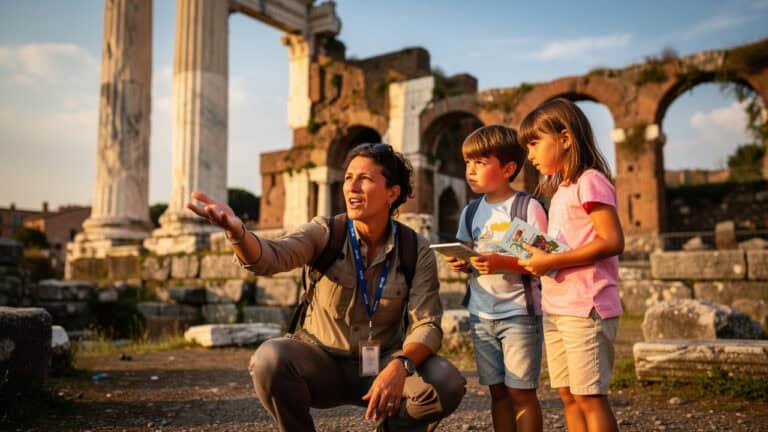

The plate lands on the table still steaming, the paper-thin crust bubbles around the edge, and the first bite snaps with a gentle crunch. The tomato is bright, the mozzarella just starts to stretch, and the whole pizza disappears faster than planned. For us, moments like this are what the phrase best pizzerias in Rome really means – not just great food, but a room full of Romans talking over each other while the oven roars in the corner.
Rome has thousands of pizzerias, yet many visitors end up at the same tired places near the Trevi Fountain or the Colosseum, missing the authentic experiences that mapping food practices in urban tourism contexts reveals as essential to genuine cultural immersion. Menus come with photos in five languages, the bill stings, and the pizza feels forgettable. During our ETuk Tours Rome rides, guests often tell us they thought they had tasted “the best” already, then realize how much better it gets a few streets away from the crowds.
As local guides, we spend our own evenings in neighborhood spots where the menu is mostly in Italian and the line at the door is almost entirely Roman. We know which ovens turn out crisp pizza bassa (Roman style), which focus on pillowy pizza alta (Neapolitan style), and where to grab perfect pizza al taglio by the slice between sights. With our eco-friendly tuk-tuks and golf carts, we can link these places into one easy evening, even for guests coming from Civitavecchia port with only a few hours in the city.
In this guide, we share ten places where locals actually eat, from Testaccio and Trastevere to Prati and the historic center. These are not tourist traps with photo boards. These are the spots we recommend to friends and guests when they ask for the real best pizzerias in Rome – and many of them fit perfectly into our customizable ETuk food tours.
As many Roman guides like to say, “If the room is loud and the oven is hotter than the weather, you’re probably in the right pizzeria.”
Key Takeaways
- Roman vs. Neapolitan: Roman pizza is very thin and crispy, while Neapolitan pizza has a soft, chewy base with a puffy rim. This guide includes both, so you can taste and compare in a single trip.
- Go Beyond The Monuments: Many of the best pizzerias in Rome sit in local neighborhoods such as Testaccio, Trastevere, and Monteverde, not beside big sights. A short ride away from the center often means better prices and far better pizza.
- Pizza Al Taglio Is Essential: Pizza al taglio (by the slice) is Rome’s classic street food, baked in large trays and sold by weight. It is ideal for quick lunches or snacks between museums and churches.
- Know How To Order: Sit-down pizzerias fill with locals after 9 p.m. Book well-known places, and remember that peperoni means bell peppers – ask for salame piccante if you want spicy salami. Start with fried bites like supplì for a full Roman experience.
- ETuk Food Tours Help You Connect The Dots: ETuk Tours Rome can add pizza stops to almost any route, so you can try more than one style in one relaxed evening. We take care of reservations, timing, and transport with zero-emission vehicles.
Understanding Roman Pizza What Makes It Different
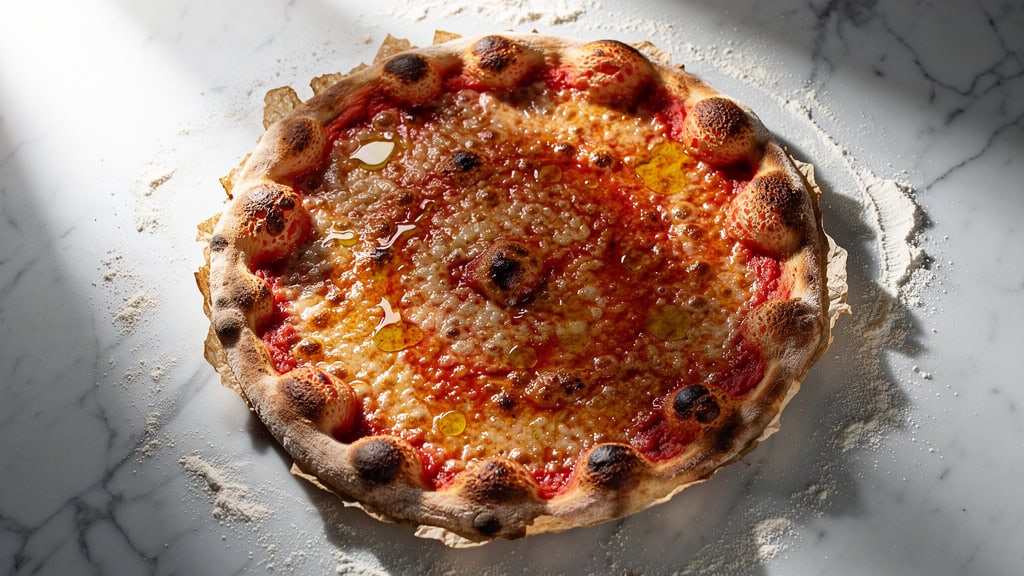
When people talk about the best pizzerias in Rome, they usually mean one of two very different styles:
- Roman pizza (pizza bassa): Thin, wide, and crisp from edge to edge. The dough often includes olive oil and less water, baked quickly in a very hot wood oven for that satisfying crack when you bite.
- Neapolitan pizza (pizza alta): Soft in the center with a tall, airy rim called the cornicione. The texture is tender and chewy rather than crunchy.
Neapolitan pizza started in Naples, but many respected Roman pizzerias now specialize in it, so visitors can taste both traditions without leaving the city.
Alongside the round pies, Rome runs on pizza al taglio – large rectangular slabs sold by weight. You point to the tray you want, show with your hand how big a slice should be, and the staff cut it with scissors before weighing. A related style, pinsa, uses a blend of flours and long fermentation for a light, airy base that works very well for lunch.
Modern pizzaioli focus on dough, slow rising, and seasonal toppings, turning classics like capricciosa into something memorable without making them fussy, reflecting broader gastronomy in tourism trends that emphasize authenticity and local culinary traditions.
A common saying among Roman bakers goes, “La pizza è semplice, ma non è facile” – pizza is simple, but not easy.
A few local tips:
- Peperoni (one “p”) means bell peppers. For spicy salami, ask for salame piccante or pizza alla diavola.
- At sit-down spots, people often start with fried snacks like supplì, fiori di zucca, or filetti di baccalà.
- Most Romans drink beer with pizza rather than wine.
1. ETuk Tours Rome Pizza Experience
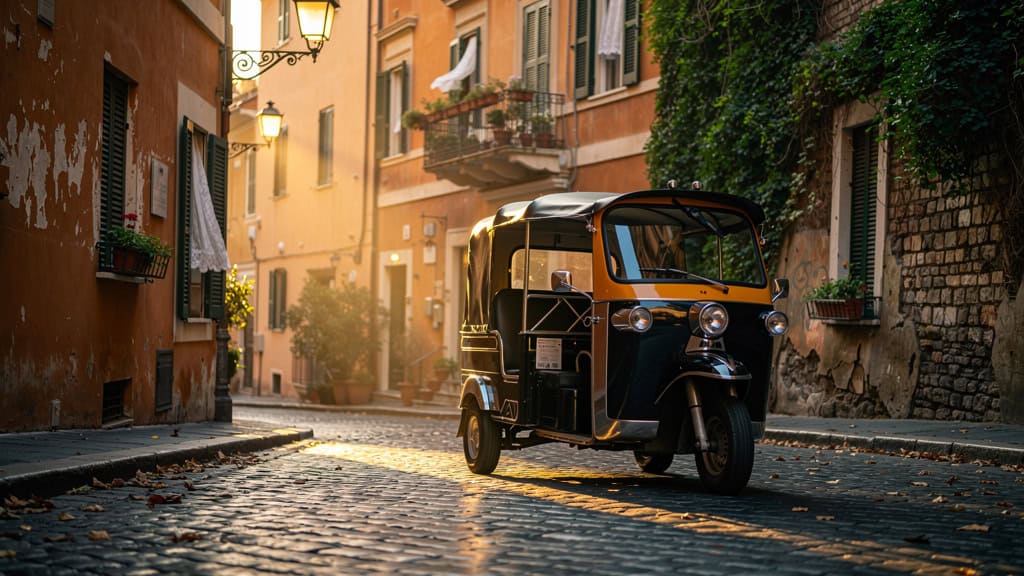
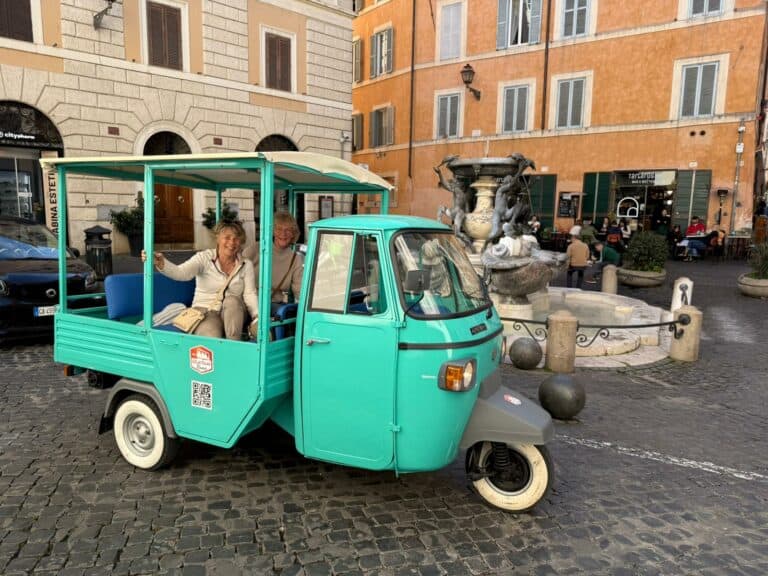
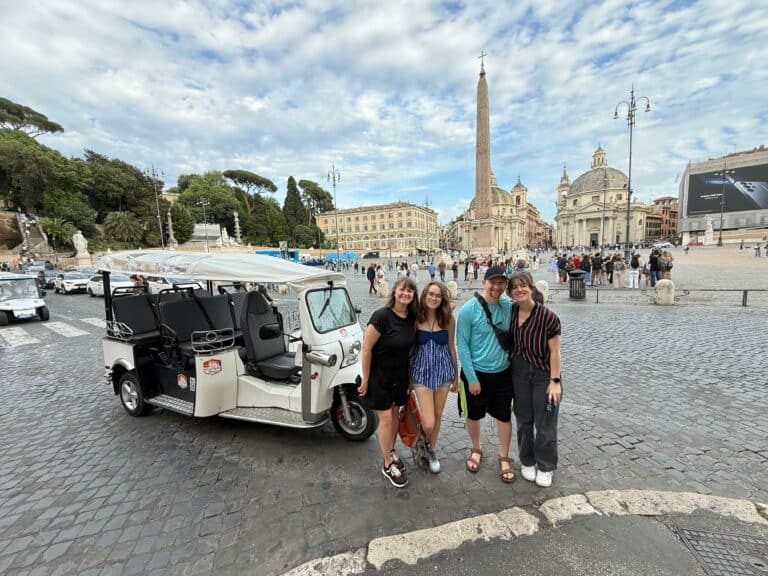
As guides who spend every week zigzagging across the city, we know it is hard to reach several of the best pizzerias in Rome in one night. They sit in different neighborhoods, often linked by long walks or slow buses. Our electric tuk-tuks, golf carts, and Ape Calessino vehicles solve that problem in a fun, comfortable way.
Through our Food Tours Rome options and fully private tours, we design evenings that visit two or three spots from this list without rushing. You might:
- Start with a classic thin-crust Roman pizza in Testaccio
- Move on to a Neapolitan specialist near the Trevi Fountain
- Finish with a late-night pizza al taglio slice in the historic center
We handle reservations, timing, and routes; you focus on eating and taking photos, creating experiences that tap into global market trends and the growing demand for authentic, localized food tourism.
Because our vehicles are small and fully electric, we can slip through narrow streets that buses and standard vans cannot use, with emissions close to zero. That matters to many families and eco-conscious travelers who want comfort without guilt. Cruise passengers coming from Civitavecchia often choose a “Rome in a Day” tour, and we are happy to add a pizza focus so they can still try several top pizzerias during a short visit.
For couples, an evening tour that mixes sunset viewpoints, a quiet stop near the Colosseum, and a shared pizza in Trastevere often becomes their favorite Rome memory. For families, we keep distances short, suggest kid-friendly toppings, and always leave room for gelato.
2. Diego Vitagliano Italy’s #1 Ranked Pizzeria
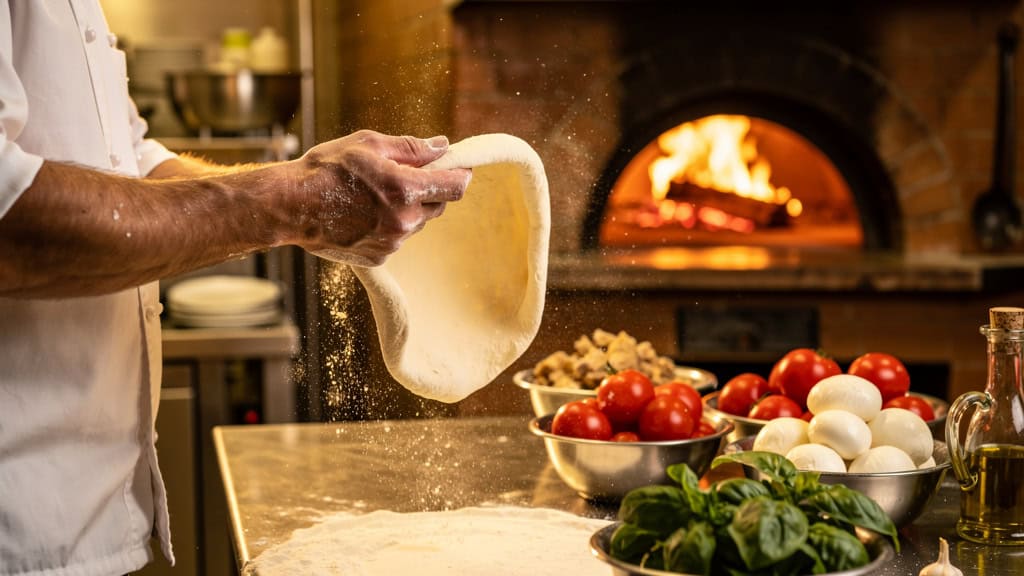
For anyone serious about Neapolitan pizza in Rome, Diego Vitagliano in Corso Francia deserves a place on the list. This pizzeria holds the title of number one in Italy from the “50 Top Pizza” guide, yet it still feels like a neighborhood spot, spread over two busy floors filled mostly with Romans.
The dough is the star: light and airy with a gentle chew and a soft, blistered rim. A simple margherita shows how clean tomato, mozzarella, and basil can taste when the base is this good. For something richer, try the pistadella, which combines Agerola mozzarella, silky mortadella, and bright green Sicilian pistachio pesto.
Prices stay modest for such a famous address, with most pizzas under fourteen euros. The only challenge is the location, since Corso Francia sits in northern Rome away from most hotel areas. That is where ETuk Tours Rome helps, turning what would be a complicated trip on buses and metro lines into a simple ride with city views along the way.
3. Pizzeria Remo The Quintessential Testaccio Experience
If you want to feel the noisy heart of Roman pizza culture, Pizzeria Remo in Testaccio is a classic choice. This long-running spot explodes with energy: staff shout orders, trays slam onto tables, and nearly every chair is filled with locals eating thin, blistered pies.
Remo does not take reservations. You give your name, wait on the square outside, and watch the queue move as pizzas fly out of the oven. For many, that short wait becomes part of the story when they talk about the best pizzerias in Rome.
We often suggest ordering something very simple: sausage on a classic Roman crust with tomato and mozzarella. The base comes smoky and crisp, with just enough char on the edge, while the sausage is lean but full of flavor. It shows how good dough and quality ingredients can carry a whole meal.
Testaccio began as a working-class food district near the old slaughterhouse, and that heritage still shapes its restaurants and market. On our Testaccio-focused ETuk routes, we often pass through the neighborhood by day and recommend Remo as a dinner option, with tips on when to arrive to keep the wait short.
4. L’Elementare Modern Roman-Style Perfection
L’Elementare is where we bring people who want to see how Roman thin-crust pizza has evolved without losing its roots. Locals love it for a base that is crisp from rim to center yet light enough to leave room for dessert. It easily earns a spot among the best pizzerias in Rome for fans of pizza bassa.
There are several locations, including a lively one in Trastevere and another in Parco Appio with a pleasant outdoor area. The ovens turn out excellent margheritas and marinaras, but the specials board is where things get exciting. A standout is the Parmigiana de Noantri, layering tomato sauce, fried eggplant, creamy stracciatella, semi-dried tomatoes, basil, Parmigiano, and a touch of charred eggplant skin for a gentle smoky note.
This kind of topping shows how a new generation of pizzaioli respects traditional flavors while playing with texture and season. Because the Trastevere branch sits directly on our usual evening routes, we can easily pause there for a relaxed pizza stop between photo breaks on the Tiber and strolls through cobbled lanes.
5. Piccolo Buco Neapolitan Excellence Near Trevi Fountain
Piccolo Buco proves that even in the busiest tourist zone, you can still find serious pizza. Tucked a short walk from the Trevi Fountain, this small restaurant almost always has a line out the door. Rather than being a warning sign, that queue usually means Romans and well-informed visitors are waiting together for real Neapolitan-style pies.
Inside, the space is bright and modern, and many tables have a clear view of the oven where the pizzaioli stretch and spin dough. The crust rises into a thick, soft rim with a tender center, perfect for folding. The margherita is excellent, but we often suggest something a little bolder.
One favorite combines fiery Calabrian ‘nduja with creamy, salty cacioricotta and a drizzle of fruity olive oil. The heat from the sausage meets the mellow richness of the cheese in every bite, so the pizza feels rich without being heavy. Because the Trevi area can be very busy, we often help guests plan their Piccolo Buco stop for early or late evening, when the wait is shorter and the meal feels calmer.
6. Casa Manco Testaccio Market’s Hidden Gem
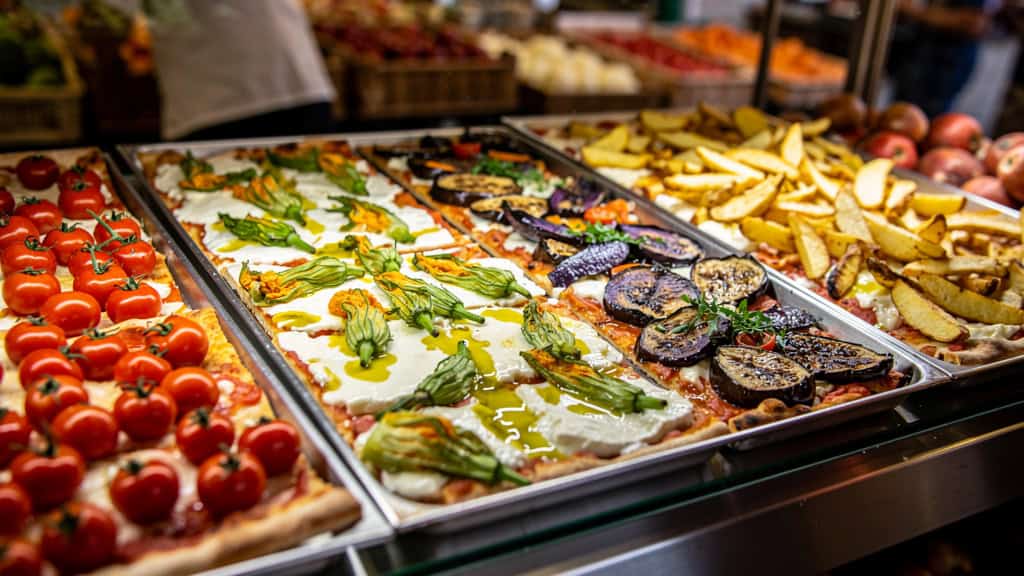
Inside Testaccio Market, at Box 22, Casa Manco hides among butchers, vegetable stands, and cheese counters. Many visitors walk straight past without realizing one of the best pizza al taglio spots in Rome is behind the glass. Once you see the trays, it is hard to choose just one slice.
The stall feels warm and personal, with rustic touches that soften the metal market structure. Casa Manco focuses on pinsa-style dough, using long fermentation and a blend of flours for a base that is crisp underneath and softly airy on top. It is ideal for lunch, since even generous toppings do not feel heavy.
A slice we often recommend pairs gooey mozzarella with spicy salami and fresh basil that smells like a tiny herb garden. The base stays crisp while the cheese stretches with every bite, showing how much care goes into each tray. Because it sits inside a working market, you can eat while watching Romans shop for fish, fruit, and vegetables.
Our Testaccio ETuk routes often include a market stop, and Casa Manco is usually where we pause for a quick, casual pizza tasting between morning sightseeing and an afternoon round of monuments.
7. Giacomelli Prati’s Historic Institution Since 1946
Giacomelli in Prati has been turning out Roman thin-crust pizzas since 1946, long before anyone searched online for the best places. The restaurant sits on a quiet street about a kilometer north of the Vatican, and its walls are covered with photos from decades of regulars and well-known visitors.
Early in the evening, many tables go to tourists fresh from a Vatican visit. After 9 p.m., the room shifts to mostly locals and the noise level rises. Giacomelli is one of the few pizzerias where guests can choose small, medium, or large pizzas, which makes it easy for groups to share and taste more options.
The sausage and mushroom pizza stands out, with a very crisp, slightly charred base and lean sausage full of flavor. Because Giacomelli is so popular, we strongly suggest booking ahead – something we are happy to handle when guests finish one of our Vatican-area tours and want a real Roman dinner nearby.
8. Pepito’s Trastevere’s Neighborhood Secret
Pepito’s sits away from Trastevere’s crowded main lanes, in a modest strip of local shops in the southern part of the district. At first glance it looks simple, yet for more than thirty years this pizzeria has kept families coming back week after week. When we talk about the best pizzerias in Rome that almost no tourist finds alone, Pepito’s is always on the list.
Inside, the wood-fired oven near the entrance draws the eye as pizzas slide in on long peels and come out bubbling and charred. The menu is huge, with over thirty classics and more than twenty specials, so staff are patient about helping guests choose.
The star for many visitors is the amatriciana pizza, which takes the beloved pasta sauce and spreads those flavors over a crisp Roman base. Strips of guanciale add a rich, savory kick, Pecorino Romano brings salt and tang, tomato sauce adds brightness, and a touch of chili keeps things lively. Because Pepito’s sits outside the main tourist flow, our local guides often suggest it to guests who want Trastevere with a real neighborhood feel.
9. Emma Restaurant Chic Setting Near Campo de’ Fiori
Emma Restaurant offers a more polished pizza night, combining serious Neapolitan-style pies with a stylish dining room near Campo de’ Fiori. Modern chairs and a glass roof share space with stone walls and wooden beams, so the room feels both contemporary and historic at once.
The menu covers many topping combinations, yet we almost always point first to the margherita with buffalo mozzarella. The dough is soft and chewy with a touch of char, the tomato sauce is bright and slightly sweet, and the mozzarella melts into silky white puddles. Many guests tell us this pizza alone convinces them they do not need to travel to Naples for high-level Neapolitan style.
Because of its central location, Emma fits very well into our romantic evening ETuk routes. Couples can glide through lit-up squares and past the Pantheon, then stop here for a relaxed pizza and a shared dessert before heading back to the hotel.
10. Pizza Florida Campo de’ Fiori’s Authentic Slice
Pizza Florida sits close to Campo de’ Fiori in an area where many places focus more on tourists than on flavor. That is exactly why we like it. This small, casual shop stands out as one of the best pizza al taglio options in the historic center, with fair prices and staff who are happy to explain toppings instead of rushing people along.
Inside, the mood is low-key and friendly, and the counter usually holds a wide range of Roman-style trays. Outside, a simple bench faces nearby ruins, turning a quick bite into a pleasant pause between sights. Slices are cut to order and weighed, so it is easy to try several without overdoing it.
One combination we often recommend layers sweet eggplant, savory buffalo mozzarella, peppery arugula, and bright cherry tomatoes over a thick, crunchy base. The mix of soft vegetables and crisp dough works especially well on warm days when a heavy meal would be too much. On our center-city ETuk tours, Pizza Florida makes an ideal lunch stop between Campo de’ Fiori, the Pantheon, and the river.
Conclusion
After years of guiding guests around the city, we have learned that the best pizzerias in Rome are rarely the ones with the biggest signs near the Colosseum. They are the noisy rooms in Testaccio where names are shouted at the door, the Trastevere corners where locals argue over football, the market stalls in Testaccio, and the long-running institutions in Prati where families gather late into the night. Each place on this list shows a different side of Rome through its dough, toppings, and crowd.
By now, the difference between crisp Roman pizza bassa and soft Neapolitan pizza alta should feel clear, and pizza al taglio should sound like more than just a snack. Knowing when Romans eat, how to order salame piccante without a plate full of bell peppers, and why starting with supplì and a cold beer matters turns a simple dinner into a small cultural lesson.
As we often tell our guests, “The fastest way to understand Rome is to follow the pizza, not the guidebook.”
Our role at ETuk Tours Rome is to link these flavors and neighborhoods into one smooth day or evening. We take care of routes, reservations, and timing, so you can move from market to trattoria to pizzeria without checking maps or rushing down long streets. If tasting the real best pizzerias in Rome sounds appealing, we would be glad to guide your next visit and share the ovens and dining rooms we love. Book a customizable ETuk food tour, and let Rome’s pizza show its soul one slice at a time.
FAQs
What’s The Difference Between Roman And Neapolitan Pizza?
Roman pizza comes on an ultra-thin, crispy crust called pizza bassa, often made with olive oil and baked until it cracks when bitten. Neapolitan pizza uses a softer, thicker base with a puffy rim and a tender center. Both styles appear at many of the best pizzerias in Rome, so visitors can try each and see what they prefer.
What Does “Pizza Al Taglio” Mean And How Do I Order It?
Pizza al taglio means pizza “by the cut.” It is baked in large rectangular trays and sold by weight rather than as a whole pie. Ordering is simple:
- Point to the tray you want
- Show with your hand how big a slice you’d like
- Staff cut the piece with scissors, weigh it, give you the price, and warm it if needed
These shops usually open from late morning through evening, which makes them perfect for lunch and snacks between sights.
Why Should I Never Order “Pepperoni” Pizza In Rome?
In Italian, the word peperoni with one “p” refers to bell peppers, not to spicy salami. Ordering a pepperoni pizza in Rome will almost always bring a vegetarian pie covered in peppers. To get something closer to American pepperoni, ask for salame piccante or choose a pizza alla diavola. Staff at the best pizzerias in Rome are used to this confusion and often smile as they help guests order the right one.
When Do Romans Actually Eat Pizza?
Most sit-down pizzerias in Rome open only for dinner, usually from around 7 p.m. Locals rarely arrive at opening time and tend to come after 9 p.m., when the rooms fill and the atmosphere turns lively. For daytime eating, pizza al taglio shops cover the gap, serving slices through lunch and late afternoon. Knowing this rhythm helps visitors decide when to book a table and when to just drop in.
Can ETuk Tours Rome Create A Custom Pizza-Focused Itinerary?
Yes. Our Food Tours Rome experiences and private ETuk or golf cart tours can focus almost entirely on pizza, moving between two or three of the best pizzerias in Rome in one relaxed evening. We help guests mix styles, neighborhoods, and atmospheres, from market slices to sit-down dinners. Our local guides handle bookings, timing, and routes so no one has to worry about transport or schedules. This works especially well for cruise passengers or food lovers who want a deep, tasty look at Rome’s pizza culture in limited time.