
Standing under the Pantheon’s huge dome feels like stepping into a time machine. Marble under your feet, echoes in the air, and a circle of sky above all whisper nearly 2,000 years of stories. When people search for Pantheon Rome history, they often do not realise this is the best‑preserved ancient building in the city, still standing where Romans once prayed, debated, and watched the sun cross the dome.
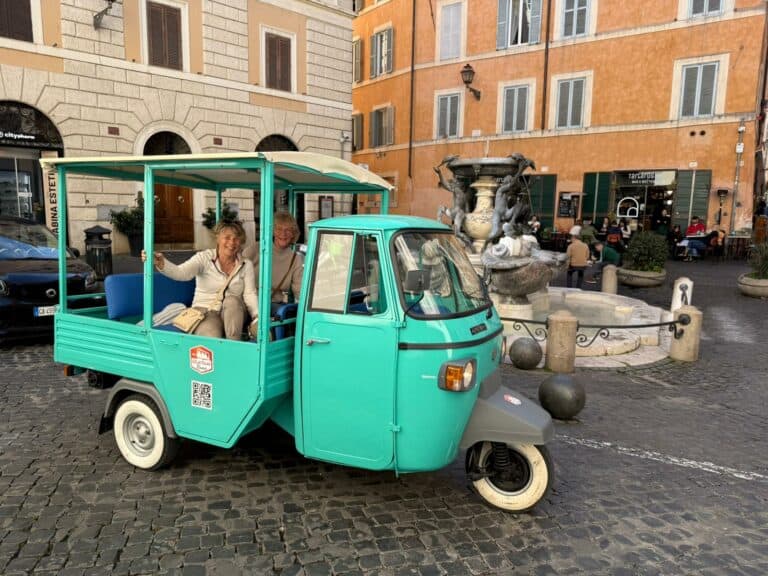
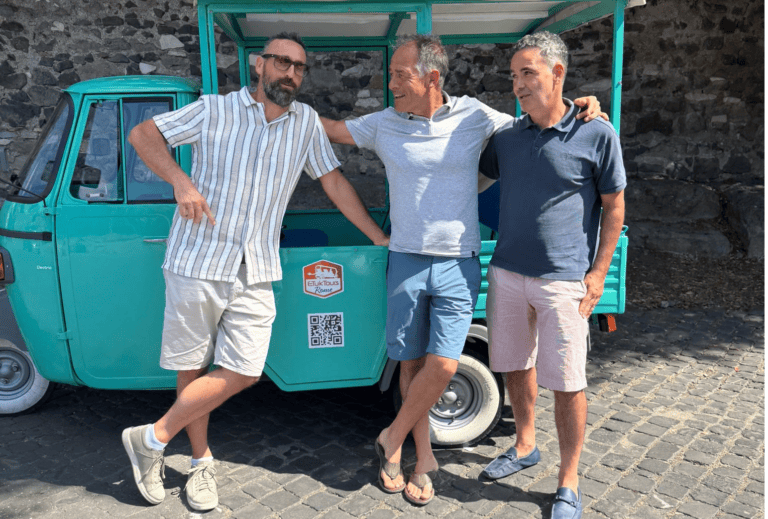
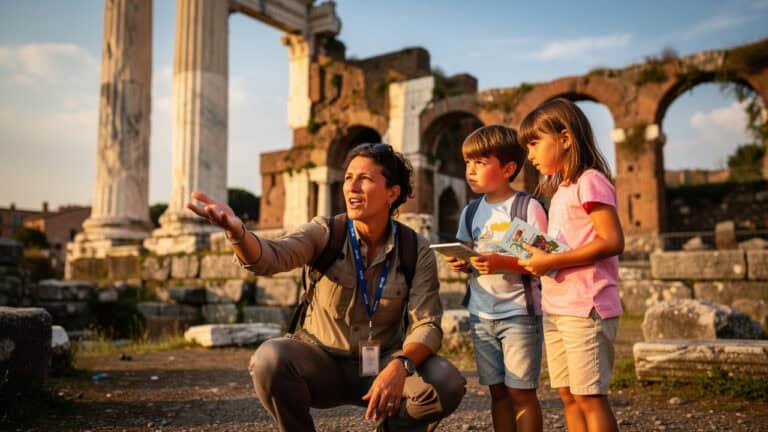
On our ETuk Tours Rome visits, guests roll up in silent electric tuk tuks, look up, and fall quiet, experiencing firsthand the legacies of ancient Rome that shaped Western civilization. Then questions come fast: How was this built without steel? Why is there a hole in the roof? How did it outlast so many other monuments? This guide on Pantheon Rome history gives simple answers you can remember when you stand in front of it.
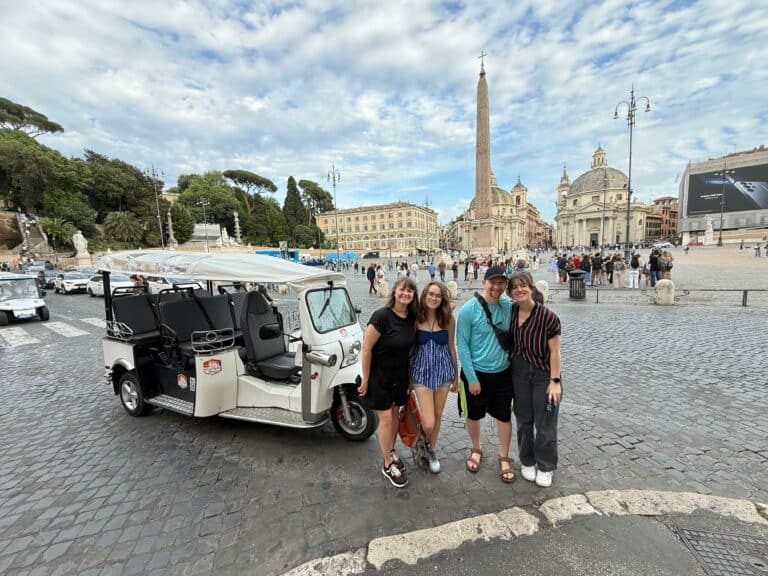
Many visitors, especially cruise passengers from Civitavecchia, have only one day in Rome. Time feels tight, so choices matter. That is why we include the Pantheon on our ETuk Tours Rome routes. Our eco‑friendly tuk tuks and golf carts slip through narrow streets buses cannot use, linking the Pantheon with the Colosseum, Trevi Fountain, and Piazza Navona without long walks.
In this complete guide, we follow the story from Agrippa’s first temple to Hadrian’s masterpiece, then to its life as a Christian church and royal tomb. Along the way you will find facts, legends, and simple visiting tips, so when you step into Piazza della Rotonda you know what you are seeing and why this building matters.
Key Takeaways
- The Pantheon is the best‑preserved major building from ancient Rome, and its dome has been the world’s largest unreinforced concrete dome for almost 2,000 years. This engineering record sits at the heart of Pantheon Rome history and still surprises modern architects.
- The building you see was rebuilt under Emperor Hadrian around 126–128 AD, but it keeps Agrippa’s earlier inscription on the front. For centuries this misled visitors about the true timeline of Pantheon Rome history.
- The design combines a Greek‑style portico with a huge round hall and perfectly spherical interior. This bold mix inspired later landmarks from Florence Cathedral’s dome to the United States Capitol.
- The Pantheon became a Christian church in 609 AD, which protected it from the ruin and stone‑robbing that destroyed many temples. It still hosts Mass and ceremonies today, so visitors should follow church dress rules.
- Admission has long been free, which makes it easy to add to a Rome day. Early morning or late afternoon bring softer light and smaller crowds; the square outside adds charm with cafés and street life.
- Thanks to its central position, the Pantheon fits neatly into routes that also visit Trevi Fountain, Piazza Navona, and more. On our ETuk Tours Rome itineraries, we often pause here so guests can explore inside while we wait nearby with our quiet electric vehicles.
What Is the Pantheon? Understanding Rome’s Architectural Wonder
When we explain Pantheon Rome history, we start with the name. “Pantheon” comes from Greek roots meaning “all the gods.” The original building was likely a temple linked to several major Roman deities, although scholars still debate its exact purpose. That idea of “all the gods” hints at how grand and unusual this structure felt in Roman times.
Today its official title is the Basilica of Santa Maria ad Martyres. The building has a double role: it is an active Catholic church where Mass is celebrated, and at the same time one of the most visited ancient monuments in Rome. On a single day you might see worshippers, architects, school groups, and cruise passengers all sharing the space beneath the dome.
One reason Pantheon Rome history stands out is its remarkable state of preservation. While many temples became ruins or piles of recycled stone, this one still has its roof, much of its interior marble, and its original bronze doors. Step inside and it is easy to imagine toga‑clad Romans in almost the same spot, looking up at the same circle of sky.
The Pantheon stands in the heart of the historic center, in Piazza della Rotonda. From here it is only a short walk or ride to Trevi Fountain, Piazza Navona, Campo de’ Fiori, and the Tiber River. Our eco‑friendly tuk tuks and golf carts move through these tight streets smoothly, which is one reason we love including a Pantheon stop on time‑sensitive tours from Civitavecchia.
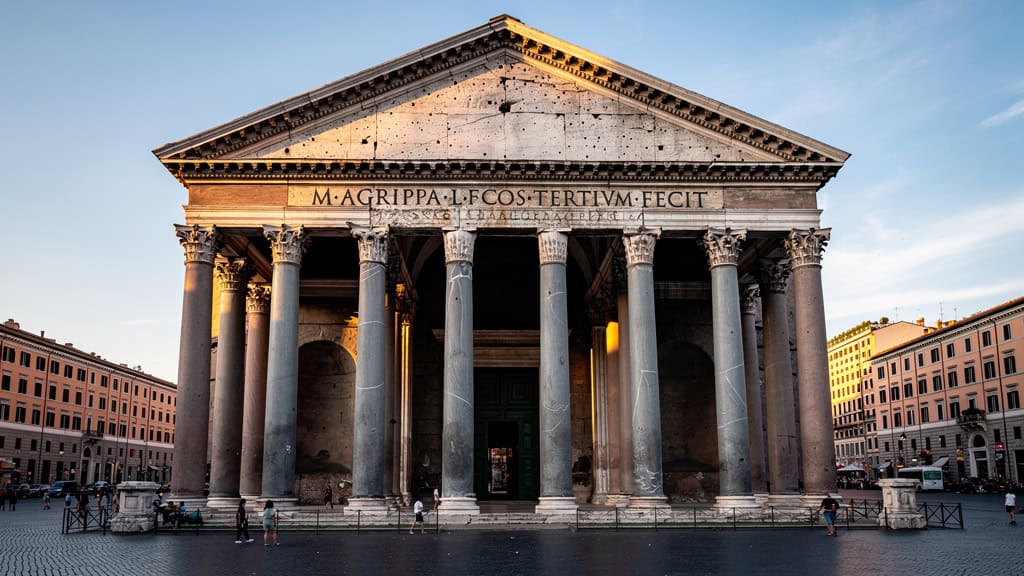
What makes the building so special architecturally is the blend of a classical portico with a massive round hall, or rotunda. The front looks like a Greek temple with tall columns and a triangular pediment, but behind it rises a huge brick and concrete drum topped by a dome. That mix became a model for later architects, from Brunelleschi studying it before designing Florence Cathedral’s dome to Thomas Jefferson using it as inspiration for the University of Virginia Rotunda.
Michelangelo is said to have called the Pantheon “angelic and not of human design,” a line often quoted by architects who study its proportions.
The Original Pantheon of Agrippa (27-25 BC)
Pantheon Rome history begins with Marcus Vipsanius Agrippa, powerful general and son‑in‑law of Emperor Augustus. Between 27 and 25 BC he built the first Pantheon on his land in the busy Campus Martius district, alongside his baths and the Basilica of Neptune.
We do not know exactly what this first Pantheon looked like, which adds mystery for history fans. For a long time archaeologists pictured a T‑shaped building facing south; more recent digs suggest a round hall with a porch facing north, like the structure we see now.
The name “Pantheon” suggests a temple to all the gods, yet ancient writers do not fully agree on its role. The historian Cassius Dio thought it was named for the many statues inside, especially Mars and Venus, while others think it may have focused on Mars alone. Since Roman temples were usually dedicated to a single deity, even the name raises questions.
Pliny the Elder left precious details about its decoration. He described columns with capitals cast from fine bronze from Syracuse and Caryatids – female figures used as supports – carved by the Athenian artist Diogenes. One colourful story claims that one of Cleopatra’s famous pearls was cut in half so each half could serve as an earring for a statue of Venus inside.
Agrippa’s building did not last long. It was badly damaged by fire in 80 AD and rebuilt by Emperor Domitian, then destroyed again after lightning struck in 110 AD. These disasters opened the way for a full redesign under Emperor Hadrian, who created the Pantheon that still stands. When we pause outside with guests, we remind them they are seeing at least the third version in the long line of Pantheon Rome history.
Hadrian’s Masterpiece: The Pantheon Rebuilt (126-128 AD)
The Pantheon as we know it belongs to Emperor Hadrian, famous for his love of art and architecture. Construction probably began under Emperor Trajan around 114 AD, but Hadrian completed and dedicated the new structure between about 126 and 128 AD. His version changed Pantheon Rome history by setting an extraordinary standard for concrete engineering and harmonious design.
The architect’s identity is still debated. Many historians point to Apollodorus of Damascus, the brilliant designer of Trajan’s Forum. A later story says he mocked Hadrian’s early designs and was executed for it once Hadrian came to power. Whether true or not, it adds drama to discussions about how this building came into being.
Hadrian made a striking choice when he finished the new Pantheon: instead of carving his own name on the front, he reused Agrippa’s inscription. The portico still reads “M·AGRIPPA·L·F·COS·TERTIVM·FECIT,” or “Marcus Agrippa, son of Lucius, built this when consul for the third time.” For centuries visitors assumed they were looking at Agrippa’s original building.
Beneath that line is a smaller inscription from 202 AD recording a restoration ordered by Emperors Septimius Severus and Caracalla, who “carefully restored the Pantheon, worn by age.” Even in ancient times, people had to maintain their great monuments.
Hadrian’s redesign created the powerful shape we recognise today: a classical porch leading into a vast circular hall capped by a dome. The brick and concrete rotunda channels the enormous weight above into hidden supports in a way that still impresses engineers. When we bring guests inside, we like to point out that this building, finished nearly nineteen centuries ago, still guides modern architectural thinking.
Architectural Genius: The Structure and Design of the Pantheon
The Grand Portico
The first thing most people notice is the grand portico with its forest of columns. It looks like a classic Greek temple, but its scale and materials tell an important part of Pantheon Rome history. Eight huge Corinthian columns stand across the front, with four more in each of the two inner rows, forming a deep porch that leads to the bronze doors.
Each grey‑granite column is about 39 feet tall, 5 feet across, and weighs around 60 tons. They were quarried at Mons Claudianus in Egypt, dragged overland to the Nile, floated downriver, shipped across the Mediterranean, and taken up the Tiber to Rome. When we describe this on our ETuk Tours Rome stops, guests often try to picture the effort without cranes or trucks.
Look carefully at the masonry behind the portico and you will see traces of a higher “ghost pediment.” This outline suggests builders first planned even taller columns. When those shafts failed to arrive, they used slightly shorter ones and adjusted the design. Even a masterpiece like the Pantheon has last‑minute changes hidden in its stone.
Above the columns once stood a gilded bronze decoration in the triangular pediment, perhaps showing an eagle or other imperial symbol. It has vanished, but the holes where clamps held it remain. The towering bronze doors, more than 24 feet high, do survive and are among the very few original monumental bronze doors from Roman times still in daily use.
The Rotunda and the Perfect Sphere
Step through the doorway and the Pantheon reveals its greatest secret. The round hall, or rotunda, is as high from floor to the oculus as it is wide from wall to wall – about 43.3 metres, or 142 feet. Imagine a perfect sphere inside the building: it would touch the floor, the circular wall, and the crown of the dome exactly. This geometry lies at the heart of Pantheon Rome history.
The rotunda walls are incredibly thick, around 21 feet at the base. Hidden inside are relieving arches and hollow chambers that channel the dome’s weight into eight main piers. From the interior you see only coloured marble and calm symmetry, but within the wall lies a complex structural system.
Roman builders varied the materials as the wall rises, using heavier concrete below and lighter mixes above. This step‑by‑step change supports the vast dome without modern reinforcement and keeps stress under control.
A favourite legend says that during construction the interior was filled with earth mixed with gold coins. Once the dome was finished, Hadrian invited Romans to carry the soil away and keep any coins they found. Whether the story is true or not, it shows how strongly people connected with the building even in ancient times.
For visitors, the effect is simple. You walk from a narrow street into a wide, calm, perfectly shaped space. Your eye follows the circle of the floor, the lines of the marble walls, and the curve of the dome up to the oculus. For many guests, that first look turns Pantheon Rome history from dates and names into a feeling.
The World’s Largest Unreinforced Concrete Dome
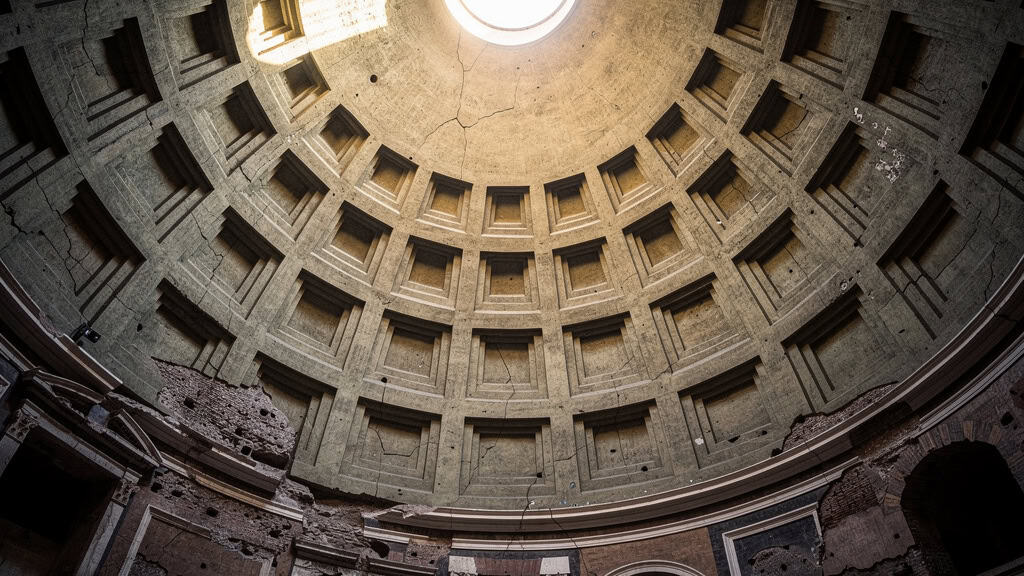
At the centre of Pantheon Rome history stands one astonishing record. The dome is the largest unreinforced concrete dome in the world and has held that title for almost 2,000 years. No steel bars hide within it – only carefully layered ancient concrete.
The dome spans about 142 feet and is often estimated to weigh more than 4,500 metric tons. To make this possible, builders changed the concrete mix as the dome rose: heavy stone such as travertine near the base, broken tiles in the middle, and light tufa and pumice near the top. This made the upper parts much lighter.
They also reduced the thickness of the shell. At the base the concrete is about 21 feet thick; near the oculus it tapers to around 3.9 feet. From the floor this is hard to see, but it is one of the reasons this feat of engineering still stands.
Inside, the dome is cut into five rings of square coffers, or sunken panels, twenty‑eight in each ring. The number 28 was considered a “perfect number” in ancient mathematics. The coffers reduce weight and add rhythm to the ceiling; many experts think they once held gilded bronze rosettes that would have made the dome resemble a starry sky.
At the centre lies the oculus, a circular opening about 27 feet wide and the only direct source of natural light. The moving beam acts like a reverse sundial, tracing the hours and seasons on the interior. On 21 April, the traditional birthday of Rome, the midday sun hits the entrance area so that anyone walking in seems wrapped in light.
Visitors always ask about rain. Yes, water falls through the oculus, but the floor is slightly raised in the centre and 22 discreet drains sit in the marble pattern. The water flows away quickly, so even a shower feels more magical than messy.
For ancient Romans, the oculus linked the temple to the sky – a kind of open eye between the human world and the gods. For modern travellers, that circle of light is often the detail they remember most long after their Pantheon Rome history lesson is over.
From Pagan Temple to Christian Basilica: The Pantheon’s Transformation
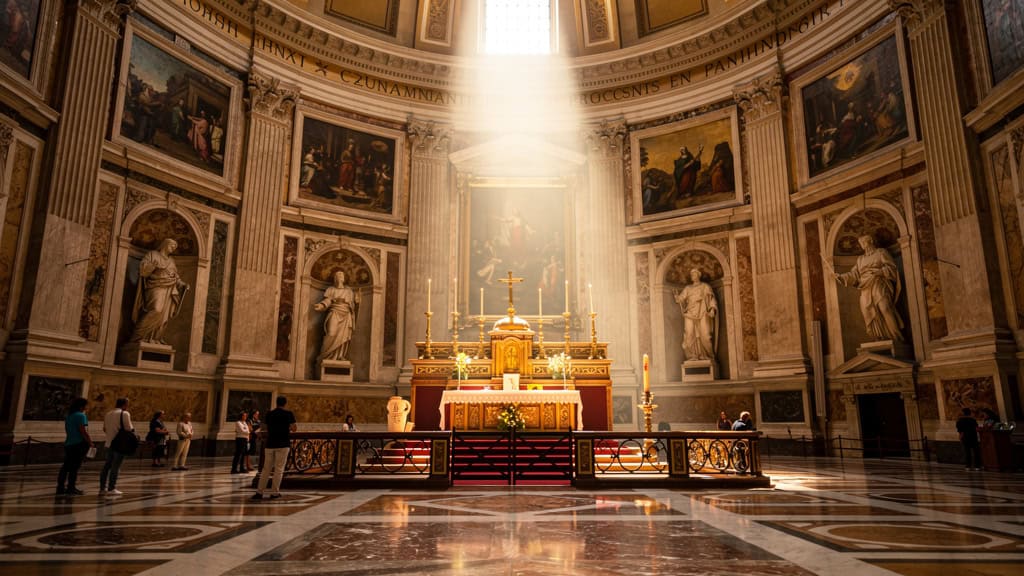
Another major chapter in Pantheon Rome history is its shift from pagan temple to Christian church. After the imperial court moved to Constantinople and the Roman Empire in Britain and across Europe collapsed in 476 AD, many ancient buildings in Rome were abandoned and stripped for materials. The Pantheon escaped that fate thanks to a bold decision more than a century later.
In 609 AD the Byzantine Emperor Phocas gave the building to Pope Boniface IV. On 13 May that year the Pope consecrated it as a Christian church named Santa Maria ad Martyres, or Saint Mary and the Martyrs. This was the first time a major Roman temple formally changed from pagan to Christian worship – a choice that probably saved the structure.
Tradition says the Pope had 28 cartloads of relics from Christian martyrs brought from the catacombs and placed beneath the main altar. A colourful medieval legend adds that as the procession entered, seven demons representing the old gods fled; one, racing to escape through the roof, knocked off a great golden pine cone that once covered the oculus.
Even as a church, the Pantheon suffered losses. In 663 AD Emperor Constans II ordered the gilded bronze tiles from the outside of the dome to be removed and shipped to Constantinople. In the 1600s Pope Urban VIII Barberini had the bronze ceiling of the portico melted down, sending most of it to make cannons for Castel Sant’Angelo and some, perhaps, for Bernini’s baldachin in St. Peter’s.
Romans were furious and coined a sharp line about Pantheon Rome history:
Quod non fecerunt barbari, fecerunt Barberini – “What the barbarians did not do, the Barberini did.”
Two small bell towers were added to the front around the same time and nicknamed “the donkey’s ears.” They were finally removed in the late 19th century.
Today the Pantheon still functions as an active Catholic church, with regular Mass and special ceremonies. One of the most beautiful modern traditions happens on Pentecost, when firefighters climb to the top of the dome and drop thousands of red rose petals through the oculus so they drift down over the congregation.
The Pantheon as a Sacred Burial Ground
Pantheon Rome history is not only about emperors and engineers; it is also about real people. Since the Renaissance, the building has become a hall of honour, chosen as the resting place for some of Italy’s most admired artists and leaders.
The best‑known tomb belongs to Raphael, the great painter and architect of the High Renaissance. He chose the Pantheon as his burial place. His grave carries a Latin inscription by his friend Pietro Bembo that is often translated as: “Here lies that famous Raphael by whom Nature feared to be conquered while he lived, and when he was dying, feared herself to die.”
Raphael lies beside his fiancée Maria Bibbiena, and above them stands the statue known as the Madonna del Sasso by the sculptor Lorenzetto. This quiet chapel, filled with art and memory, is one of the most intimate corners of the building.
Other major artists also rest inside, including the painter Annibale Carracci, the architect Baldassare Peruzzi, and the composer Arcangelo Corelli. Over time the former temple to the gods became a kind of temple to human talent.
Pantheon Rome history also connects directly to modern Italy through the royal tombs. King Vittorio Emanuele II, first king of a united Italy, is buried here, along with his son King Umberto I and Umberto’s wife, Queen Margherita. Volunteers from a monarchist association often stand as honour guards beside their graves, and many Italian visitors find this part of the visit deeply moving.
Experiencing the Pantheon Today: Practical Tips for Visitors
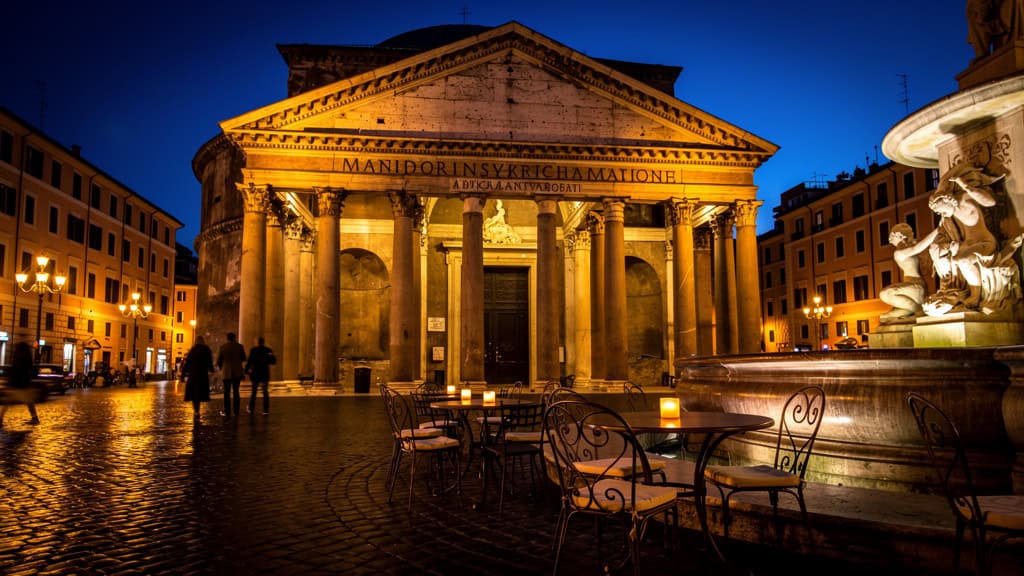
After sharing so much Pantheon Rome history, we always want guests to enjoy the building in real life. The good news is that visiting is simple and budget‑friendly. At the time of writing, entry is free, though donations are welcome and rules can change, so check recent information before you go.
Crowds are usually lighter early in the morning and late afternoon. Midday can be busy, especially in high season, but the vertical beam from the oculus is dramatic around noon. If you have time, seeing the interior at two different times of day shows how the moving light changes the mood. On rainy days, watching drops fall through the oculus and scatter on the marble is unforgettable.
Because the Pantheon is a church, visitors should dress modestly: cover shoulders and knees, and remove hats inside. Use quiet voices, especially during services. We remind our ETuk Tours Rome guests of this dress code whenever our routes include church interiors.
Piazza della Rotonda outside is full of cafés, street musicians, and a central fountain. Sitting here with a coffee or gelato while you look at the portico is one of those simple Rome moments that stay in your memory. From this spot it is easy to reach Trevi Fountain, Piazza Navona, or Campo de’ Fiori, so the Pantheon fits naturally into a short city route.
This is where ETuk Tours Rome is helpful. Our electric tuk tuks and golf carts handle the narrow streets around the Pantheon smoothly, without fumes or noise. For cruise passengers from Civitavecchia, families with children, or travellers with limited mobility, this means seeing Pantheon Rome history comfortably while also covering other major sites in the same day. We design private and small‑group tours with enough time to go inside, take photos, ask questions, and still return to your ship or hotel on schedule. Evening routes add another angle, with the façade glowing under warm lights and the square taking on a softer, romantic feel.
Conclusion
Pantheon Rome history stretches across two millennia, from Agrippa’s first temple on the Campus Martius through Hadrian’s redesign to its survival as a Christian church and national shrine. Few buildings on earth let visitors stand inside such a long, unbroken line of stories.
The Pantheon is more than the best‑preserved monument from ancient Rome. It is a textbook of architecture in real stone and concrete, showing how a simple idea – a perfect sphere under a dome – can inspire builders from Michelangelo to modern engineers. It is also a place of prayer, a resting place for artists and kings, and a living part of city life, with children playing just outside its massive columns.
For travellers with limited time, especially those coming from Civitavecchia on a cruise, fitting Rome’s highlights into a single day can feel challenging. That is why we include the Pantheon on our eco‑friendly tuk tuk and golf cart itineraries. We handle the navigation and timing so visitors can focus on looking, listening, and feeling the weight of history around them.
If there is one monument that should never fall off a Rome wish list, it is this one. Whether seen under a clear blue sky, during light rain, or at night with the façade lit against the dark, the Pantheon offers a quiet reminder of how long great ideas can last. Standing beneath the oculus, many guests describe a mix of calm and wonder that stays with them long after the tour is over.
FAQs
Question: Is The Pantheon Free To Enter?
As of the latest information, entry to the Pantheon is free. Because it functions as an active Catholic church, it has usually stayed open without a ticket, though donations are welcome. Rules can change, so check official sources or ask your guide shortly before your visit.
Question: How Long Should I Spend At The Pantheon?
Most visitors spend 30–45 minutes inside on their own, enough to admire the dome, walk around the chapels, and read a few signs. Guided visits that focus on Pantheon Rome history often last 45–60 minutes. On our ETuk Tours Rome routes, we plan time for a calm visit plus a short pause in the piazza outside.
Question: Can I Visit The Pantheon During Mass?
Yes. The Pantheon holds regular Masses, with schedules usually posted near the entrance or online. Visitors are welcome but should behave respectfully, keep voices low, and avoid taking photos during key moments. Some travellers choose to attend Mass to experience the building as a living church; others prefer to visit outside service times.
Question: What Is The Best Time Of Day To Visit The Pantheon?
We often suggest early morning just after opening or late afternoon for a quieter experience. Midday is more crowded, but the sunbeam from the oculus is especially striking then, falling almost straight down. Evening visits offer a chance to see the exterior lit against the dark sky. On rainy days, raindrops falling through the oculus add another memory to your Pantheon Rome history experience.
Question: How Does The Pantheon Fit Into A One-Day Rome Itinerary?
The Pantheon’s central position makes it easy to include in a compact route. It sits within walking or short riding distance of Trevi Fountain, Piazza Navona, the Spanish Steps, and Campo de’ Fiori. For cruise passengers or anyone with just one full day, our ETuk Tours Rome tuk tuk and golf cart tours link the Pantheon with these highlights in a smooth loop. Private options let us adjust stops and timing to your interests and schedule.