
Stepping off a cruise ship in Civitavecchia or arriving at Termini Station can feel a bit like opening a history book that fell off the shelf. The Colosseum is in one direction, the Vatican in another, and a maze of cobblestone streets lies between them. The clock is ticking, feet already hurt just thinking about it, and every sign seems to point to a different list of “must‑see” Rome attractions.
“All roads lead to Rome,” the old saying goes—but once you arrive, choosing the right route through the city makes all the difference.
Many visitors try to stitch together their own Rome landmarks tour. That often turns into long walks under the sun, confusing bus routes, taxis stuck in traffic, and queues that swallow half the day. A classic Rome walking tour can be beautiful, but it can also leave children exhausted, grandparents overwhelmed, and cruise passengers nervously watching the time.
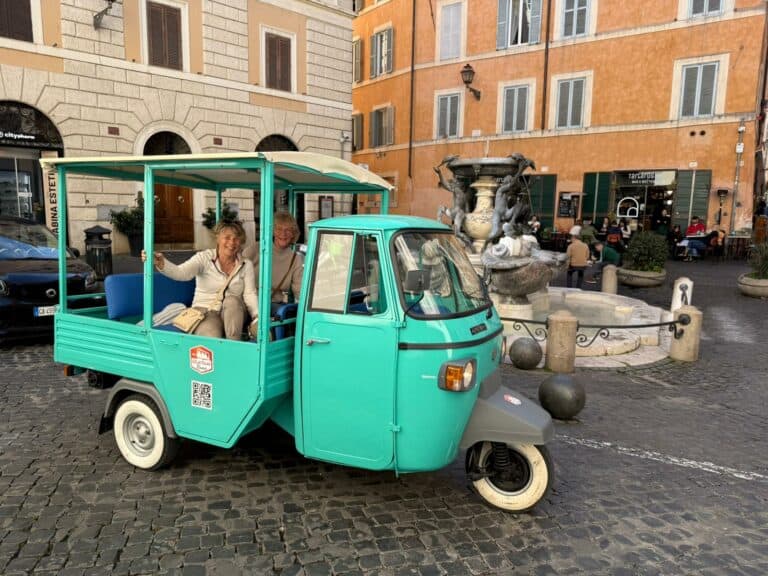
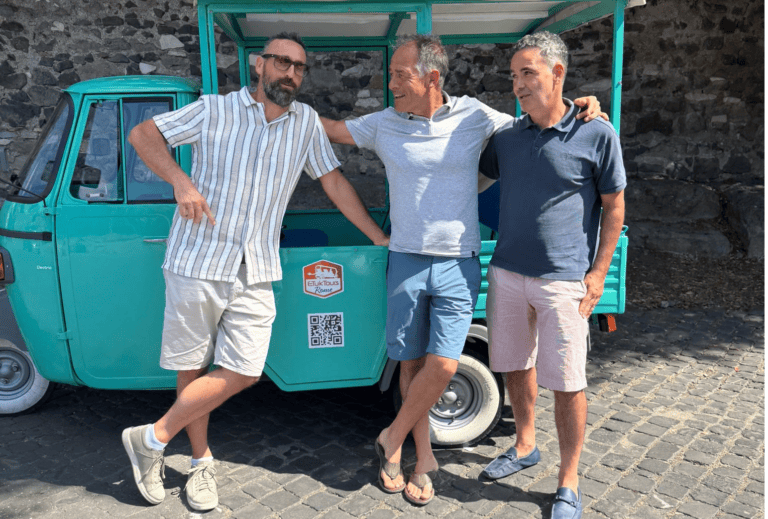
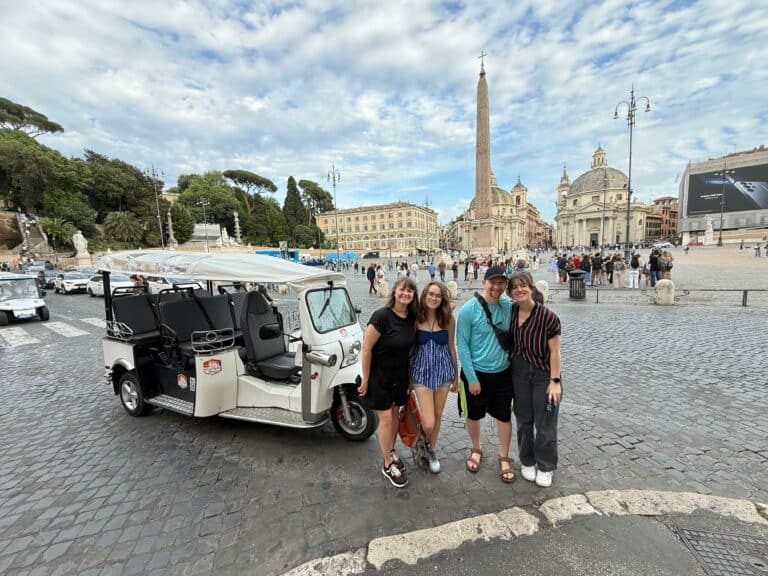
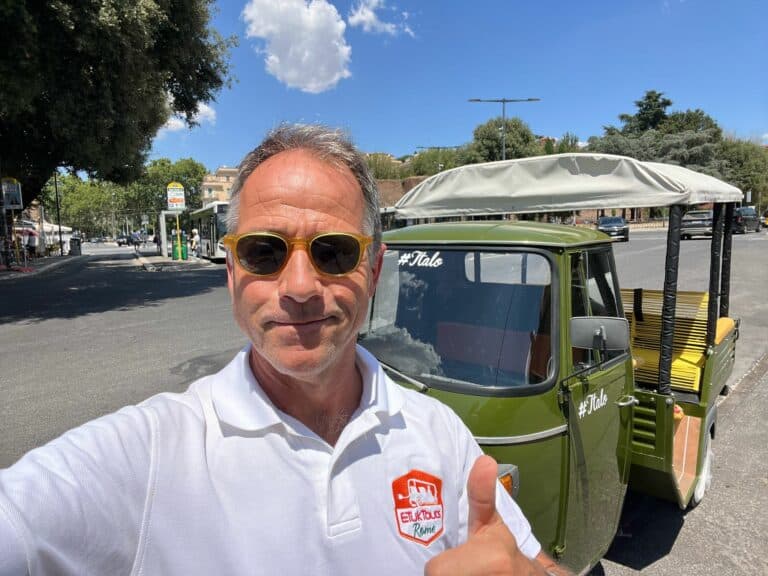
Our Classic Rome Tour with ETuk Tours Rome grew out of watching that stress again and again. With our zero‑emission electric tuk-tuks and golf cart tours Rome, we glide through narrow streets that big buses cannot use, stop right next to major highlights, and cover the city’s most important Rome historical sites in just a few hours. Local guides share stories, guests relax in comfort, and we handle the logistics, from Civitavecchia port timing to Vatican dress code reminders.
In this article, we walk through the 10 landmarks included on our Classic Rome Tour, from the Colosseum and Roman Forum to the Trevi Fountain, Pantheon, Vatican City, and more. By the end, you will see how much more can fit into three to four hours when someone else drives, explains, and plans every stop.
Key Takeaways
- Our Classic Rome Tour packs 10 of the best things to see in Rome into one efficient experience, covering Ancient Rome, Vatican City, and the Baroque center without long hikes or confusing transfers.
- We use eco‑friendly electric tuk-tuks and golf carts to keep the experience comfortable and low‑impact. These compact vehicles slip into narrow lanes, stop close to major Rome attractions, and avoid parking stress.
- Local guides turn a standard Rome sightseeing tour into a story, with clear explanations, fun details for kids, and photo tips at every stop. Pre‑booked options mean less time in lines and more time enjoying each place.
- ETuk Tours Rome works especially well for cruise passengers from Civitavecchia and time‑pressed travelers. We plan departures around port schedules, guarantee return before sailing, and can combine the Classic Rome Tour with evening or food experiences.
- Guests can choose small-group or private guided tours Rome Italy style, adjust pace on private departures, and add interior visits—such as a Colosseum guided tour or Vatican City tours—to create a relaxed yet complete first look at Rome.
1. The Colosseum: Rome’s Iconic Amphitheater
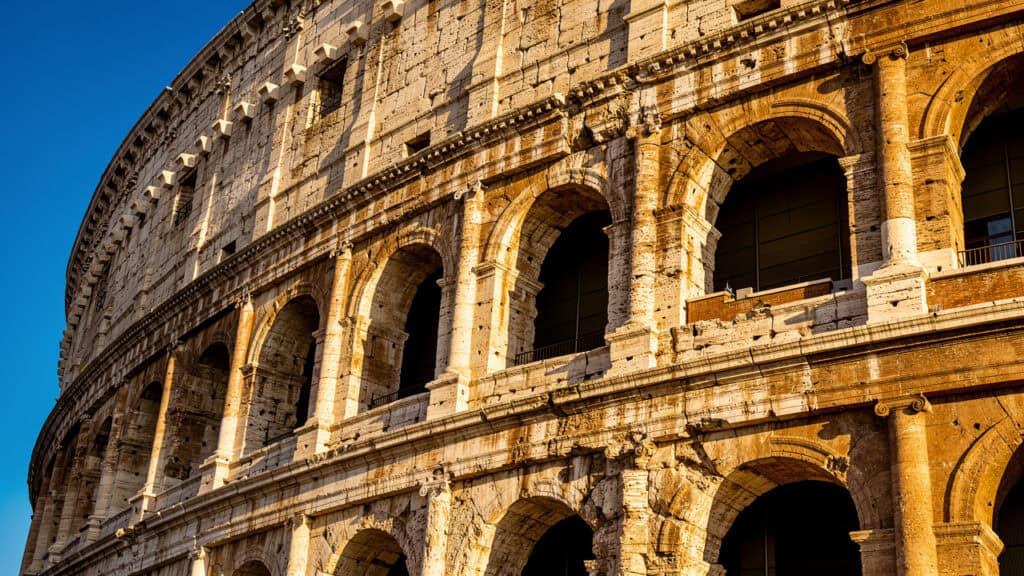
We like to start where Ancient Rome shows its boldest face. The Colosseum rises above modern traffic as the largest amphitheater ever built, once packed with 50,000–80,000 roaring spectators. Its curved outer walls, arches, and layers of seating were planned between 70 and 80 AD using advanced Roman concrete and clever engineering that still impress architects.
During our Classic Rome Tour, we stop as close as the rules allow so the arena fills the frame of your photos. From this spot, your guide brings the past to life: gladiators stepping into the arena, wild animal hunts, and even staged naval battles when the floor was flooded. With context, those stone arches change from “ruins” into a noisy sports stadium in the mind.
This tour focuses on the exterior, which means no time lost in ticket lines and more time to connect the Colosseum with nearby Ancient Rome highlights. For guests who want to go inside, we can arrange a separate Colosseum guided tour add‑on with skip‑the‑line tickets. Either way, this amphitheater sets the tone, showing the power, drama, and ambition that shaped the city.
2. Roman Forum: The Heart Of Ancient Rome
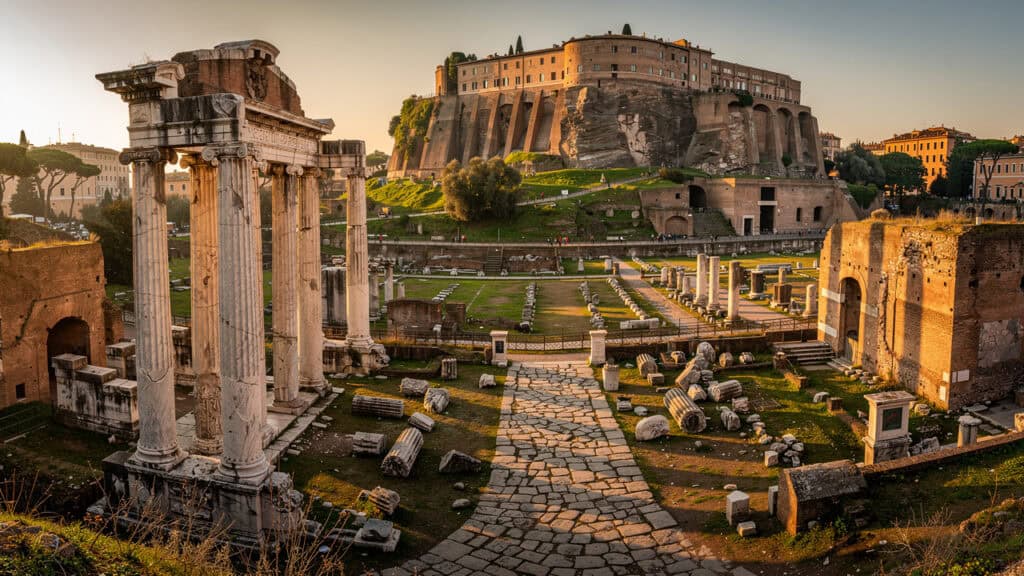
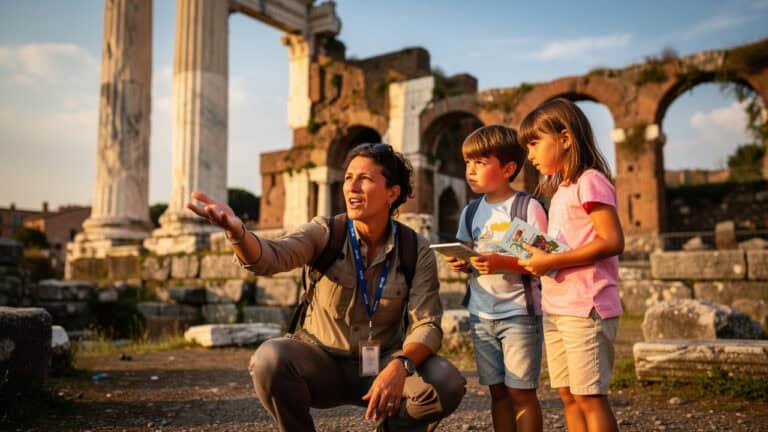
From the Colosseum, our route runs along Via dei Fori Imperiali, a road that cuts between some of the most important Rome historical sites. On one side, the Roman Forum opens like a stone valley of broken columns and half‑standing walls. Without context, it can look like a pile of rubble. With a guide, it becomes the beating heart of a world empire.
We point out the Temple of Saturn, once the state treasury; the Arch of Titus celebrating victory in Judea; the Curia where the Senate met; and the massive remains of the Basilica of Maxentius. From panoramic viewpoints, you hear about political speeches, legal trials, business deals, and religious ceremonies that once filled this square with noise and dust.
Our electric tuk-tuks give that wide view without long walks over uneven ground. From your seat, it is easy to see how the Forum connects to nearby areas, including the road up to Capitoline Hill and the slope of Palatine Hill above. Knowing that Julius Caesar and later emperors walked these same routes gives a powerful sense of standing close to the roots of Western government and law.
3. Palatine Hill: Where Emperors Lived
Look up from the Forum and a line of ruins crowns the ridge: Palatine Hill, one of Rome’s seven hills and, according to legend, the place where Romulus founded the city in 753 BC. Over time, this became the most desirable address in town, then the private world of emperors who built huge palaces overlooking their capital.
From our route, we point out the House of Augustus, the grand Palace of Domitian, and other structures that once held gardens, pools, and private theaters. While we do not drive onto the hill, we stop where the view is best so you can understand how these layers connect—palaces on the hilltop, public life in the Forum below, and the Circus Maximus spreading out on the far side.
Guides also mention the Farnese Gardens, one of Europe’s earliest botanical gardens, created here long after the emperors. It is easy to picture an emperor standing among flowers, watching chariot races at the Circus Maximus or listening to shouts rising from the Forum. This single hillside ties legends, politics, and daily life into one clear picture.
4. Vatican City: St. Peter’s Square And Basilica
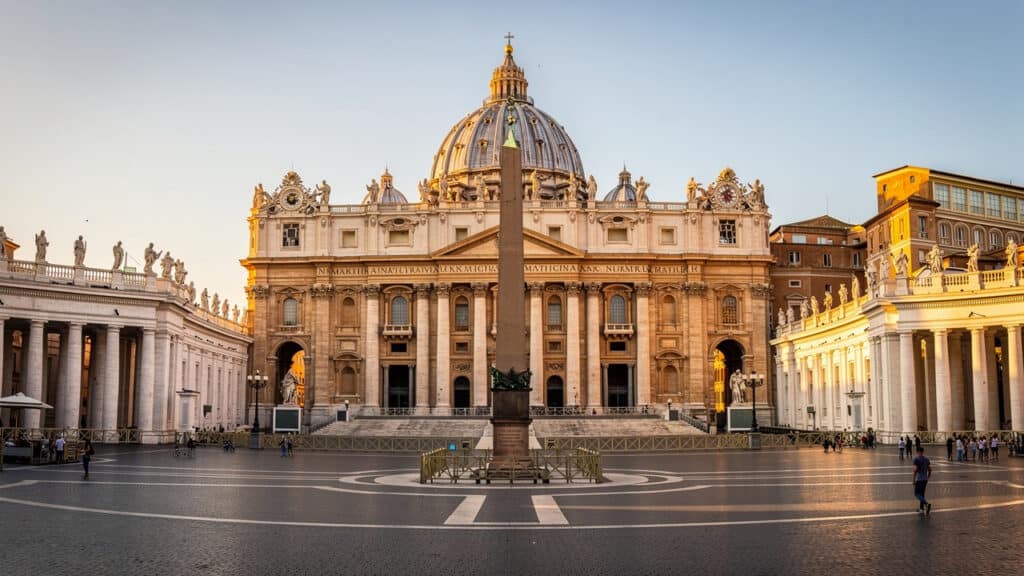
After the world of emperors, our Classic Rome Tour shifts to the center of the Catholic Church. Vatican City is the smallest independent state on the planet, yet few places match its impact on art and faith. As we arrive, Saint Peter’s Square opens ahead, framed by Bernini’s sweeping rows of 284 columns that curve like welcoming arms around visitors.
We handle the drive so you do not have to worry about Rome’s traffic, parking rules, or confusing one‑way streets. From our drop‑off point, the guide leads you into the square and explains its design, the ancient obelisk at the center, and the long line of popes who have appeared on the balcony above. The huge dome of St. Peter’s Basilica rises behind everything, a Renaissance masterpiece by Michelangelo that still shapes the skyline.
When interior access is included, we arrange skip‑the‑line entrance, avoiding queues that often stretch for hours. Inside, you can admire Michelangelo’s Pietà, Bernini’s bronze baldachin over the main altar, and chapels holding tombs of past popes and saints. We always remind guests about the dress code—shoulders and knees covered for both men and women. For many visitors, this stop marks the shift from pagan temples and imperial power to Rome’s long Christian story, often remembered as the spiritual high point of the day.
5. Trevi Fountain: Baroque Masterpiece And Roman Tradition
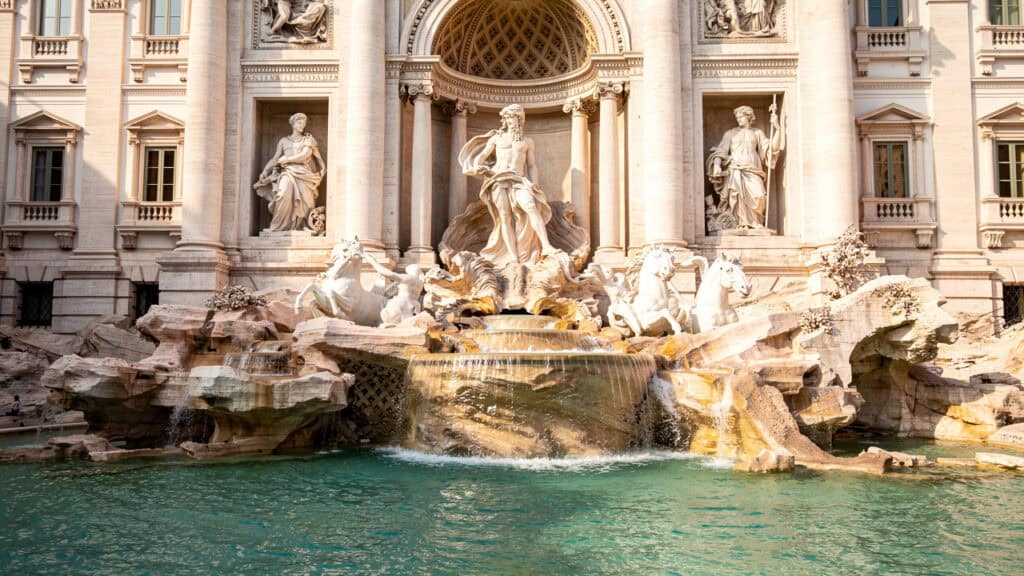
From the Vatican, our Rome landmarks tour winds back into the tight lanes of the historic center, where big coaches cannot stop. Our electric vehicles shine here, slipping down side streets until the sound of rushing water appears and the Trevi Fountain bursts into view. It is huge—26 meters high and 49 meters wide—yet squeezed into a surprisingly small square.
Your guide explains the figures carved into the stone: Neptune (or Oceanus) commanding the waters, flanked by Tritons and horses, with statues that symbolize abundance and health. Then comes the famous coin toss. One coin over the left shoulder with the right hand means a return to Rome, and every day thousands of visitors throw in about €3,000, which goes to local charity.
We time our Trevi Fountain visit to avoid the very worst crowds when possible and know the spots where photos work best. The fountain’s bright stone, the soft roar of water, and the stories of wishes and romance make it a favorite for couples and families. Many guests tell us this is the moment when Rome starts to feel like the city of movies and postcards.
6. The Pantheon: Ancient Rome’s Architectural Marvel
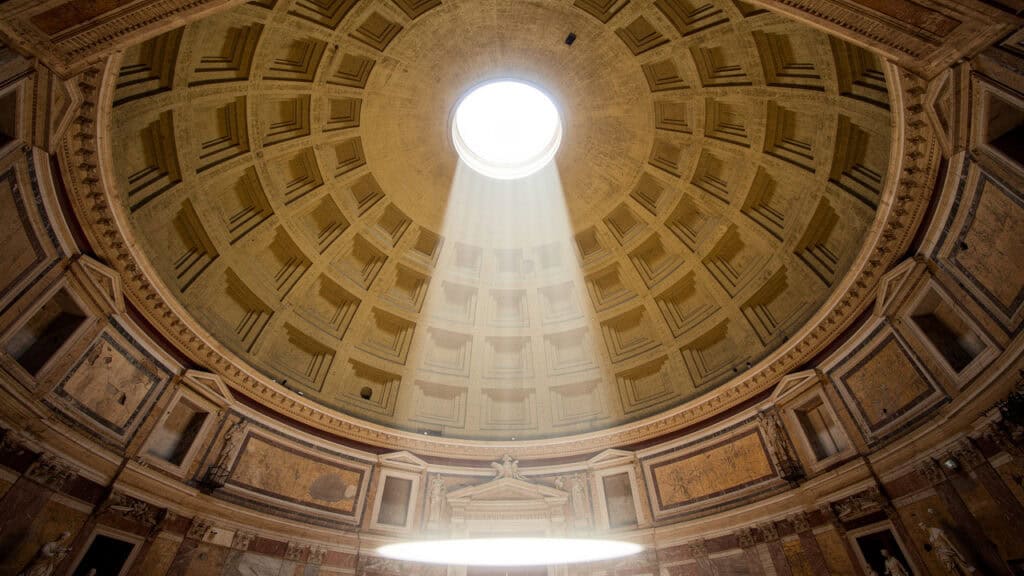
Just a few minutes away, we reach one of the most impressive buildings in the world: the Pantheon Rome. From the outside, it looks like a simple temple with a deep porch of 16 massive Corinthian columns. Inside, it becomes something else entirely—a perfect sphere of space under the largest unreinforced concrete dome still standing.
Your guide explains in simple terms how the dome works, with its diameter and height both measuring 43.3 meters, forming a perfect half‑globe. At the top is the oculus, an open circle that lets in sunlight and even rain. On a bright day, a beam of light moves slowly across the marble floor and walls, acting like a giant sundial for the whole room.
Built around 126 AD under Emperor Hadrian, the Pantheon has seen many lives: pagan temple, Christian church, and now the resting place of the artist Raphael and several Italian kings. Because our vehicles can park nearby, you spend less time walking and more time listening as the guide points out hidden details and explains how such a massive roof has stood for nearly two thousand years.
7. Piazza Navona: Baroque Rome’s Living Room
Our Classic Rome Tour then glides toward Piazza Navona, a long oval square that follows the footprint of the Stadium of Domitian, once used for athletic contests. Today, instead of racers, you find fountains, churches, cafés, and street artists, making this square feel like Rome’s grand living room.
In the center stands Bernini’s Fountain of the Four Rivers, with statues representing the Nile, Ganges, Danube, and Rio de la Plata, the four great rivers known to Europe in the 1600s. At the north end, the Fountain of Neptune shows a sea god wrestling a sea monster, while at the south end, the Fountain of the Moor adds another playful mix of water and sculpture. On one side, the church of Sant’Agnese in Agone, tied to architect Borromini, faces Bernini’s work, a reminder of the fierce rivalries of the Baroque age.
Italian actor Alberto Sordi once said, “Rome is not like any other city. It’s a big museum, a living room that shall be crossed on one’s toes.” Few places fit that quote better than Piazza Navona.
We bring guests here when the light and crowd levels are kindest, then share stories about artists feuding with popes, flooded squares turned into shallow lakes for summer games, and the daily life of Romans who treat this piazza as a favorite meeting place.
8. Spanish Steps: Rome’s Most Famous Staircase
No Rome sightseeing tour feels complete without a stop at the Spanish Steps. This grand staircase of 135 steps rises from Piazza di Spagna up to the church of Trinità dei Monti, creating a graceful “butterfly” shape that widens and narrows as it climbs. For decades, it has been one of the city’s most photographed sights.
The name comes from the nearby Spanish Embassy to the Holy See, which has stood in the square since the 1600s. At the base sits the Barcaccia fountain, shaped like a half‑sunk boat and bubbling with fresh water. Around the piazza, luxury shops line streets like Via Condotti, while the historic Antico Caffè Greco offers a link to past writers and artists.
Rome now bans sitting on the steps to protect them, but our guides know clever angles for photos from the sides and from the top. We park at a nearby access point, walk a short distance, and give you time to admire the view over terracotta roofs and domes. For many, this stop feels like the heart of the city’s dolce vita lifestyle, where fashion, history, and people‑watching all come together.
9. Piazza Venezia And The Altar Of The Fatherland
As we loop back toward Ancient Rome, we pass through Piazza Venezia, one of the city’s main crossroads. Cars and scooters swirl around us, but above the traffic rises the giant white marble monument known as the Altar of the Fatherland, or Vittoriano. Built between 1885 and 1935 to honor Victor Emmanuel II, the first king of unified Italy, it stands 70 meters high and 135 meters wide, earning nicknames like the “wedding cake” or “typewriter.”
Your guide explains the symbols carved into the structure: the Tomb of the Unknown Soldier with its eternal flame, guarded day and night; the enormous equestrian statue of Victor Emmanuel; and the two bronze chariots on top, each driven by a winged figure. You also hear how this area hosted key speeches and events in modern Italian history.
Some visitors later ride the glass elevator to the terrace for a 360‑degree view over Rome, an option we are happy to help plan. Even without going up, this square makes a strong impression, because within a few steps you can see the Roman Forum, Capitoline Hill, and the start of modern shopping streets.
10. Circus Maximus: Ancient Rome’s Chariot Racing Stadium
To round out the top ten, we visit a place many visitors miss on their own: Circus Maximus. At first glance, it looks like a long grassy field between the Palatine and Aventine hills, with only a few ruins at the edges. With a guide’s help, it becomes easy to picture a stadium large enough for 150,000–250,000 spectators, cheering as teams of horses raced at top speed.
Chariot racing was the favorite sport of ancient Romans, more popular than gladiator fights for many centuries. Our guides describe teams in different colors, dramatic crashes called “shipwrecks,” and star charioteers who became rich and famous. It feels a bit like talking about a mix of modern soccer, Formula 1, and movie stunts in one event.
From our vehicle, you can look up toward the remains of imperial palaces on Palatine Hill and imagine emperors watching from private boxes high above the track. Today, the area hosts concerts and large public gatherings, so it still serves as a place where crowds come together and history meets daily life.
Why Choose Our Classic Rome Tour: The ETuk Tours Difference
After seeing how much ground we cover, it is natural to wonder how this experience compares with a standard Ancient Rome walking tour or a big bus ride. The answer lies in the mix of comfort, access, and storytelling that our team at ETuk Tours Rome focuses on every day.
Our zero‑emission electric tuk-tuks, Ape Calessinos, and golf carts make it easy to enjoy guided tours Rome Italy style without sore feet or crowded buses. We glide from the Colosseum to Vatican City to the Baroque center in three to four hours, visiting 10 landmarks that many travelers struggle to fit into a full Rome day tour. For cruise passengers from Civitavecchia, this efficiency matters, because every hour on land counts.
Comfort is another big reason guests choose us. Sitting on padded seats under sunshades or clear rain covers, families and older travelers can relax between short walks at each site. Our vehicles slip through narrow streets where buses are banned, delivering front‑row access to treasures like the Trevi Fountain and the Pantheon. Along the way, multilingual local guides—often with backgrounds in history, art, or archaeology—share stories that link everything together.
We offer small-group and private formats. Small groups suit social travelers who enjoy meeting others, while private tours allow full control over pace, photo stops, and extra detours. When guests want interior visits with a Sistine Chapel tour, Vatican City tours, or specific Roman Forum tickets, we help arrange add‑ons with priority access. Above all, we handle the planning, so you can simply sit back, listen, look, and enjoy.
Beyond Sightseeing: Enriching Your Rome Experience With Us
Authentic Food Tours: Taste Rome’s Culinary Soul
Seeing Rome is only half the experience; tasting it completes the picture. That is why we also organize food tours Rome visitors love, often in neighborhoods like Trastevere. After a morning on our Classic Rome Tour, guests can join an “Eat as the Romans Do” walk that dips into small trattorias, family‑run delis, and artisanal bakeries tucked into side streets.
Along the way, our foodie guides introduce classic dishes such as supplì (crispy fried rice balls with melting centers), carbonara, cacio e pepe rich with Pecorino cheese and black pepper, thin‑sliced prosciutto, fresh mozzarella, and traditional pastries. Each stop comes with a story about the family who runs the place or the history of a recipe. Because food breaks down barriers, these tours often feel like a relaxed evening with new friends rather than a formal tasting schedule.
Evening Tours: Rome’s Romantic Illuminated Side
For couples and night owls, our evening golf cart tours Rome offer a completely different mood. When the sun sets, daytime crowds thin out, temperatures drop, and monuments light up in golden tones. Seeing the Colosseum rise against the dark sky or the Trevi Fountain glowing in soft white light is something many guests remember long after they return home.
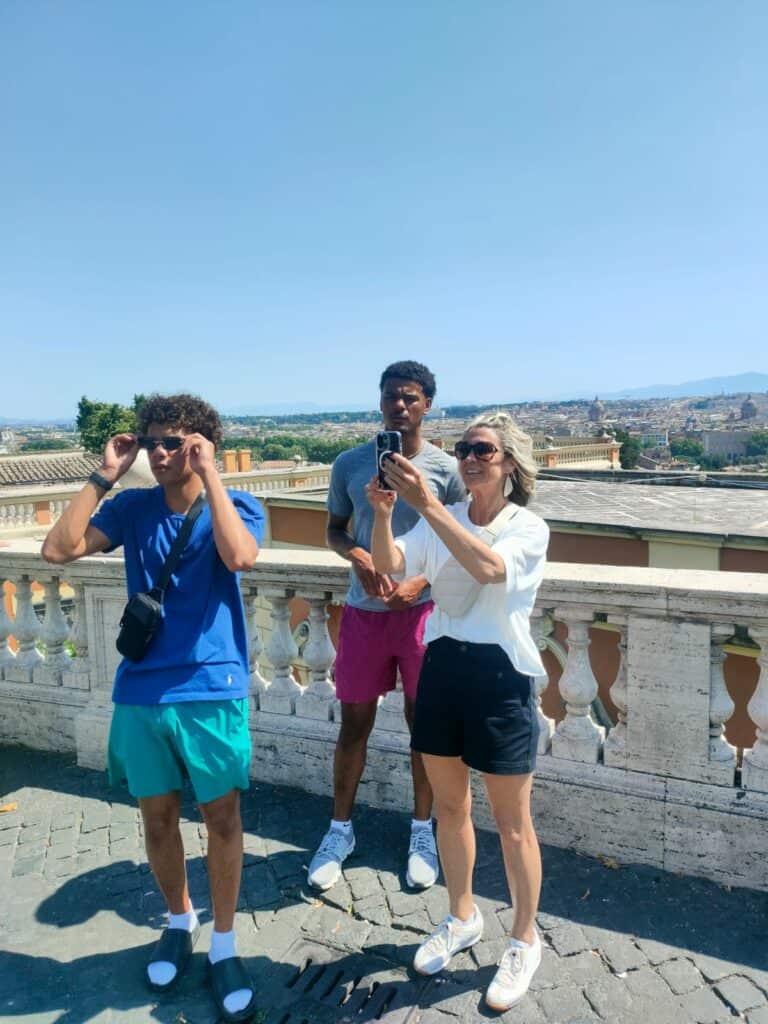
During these night rides, we often circle past St. Peter’s dome shining above the river, pause at the Pincio Terrace or the Garibaldi Monument for sweeping views, and stop for photos without the daytime crush. A gelato beside an illuminated fountain or a quiet lane near the Pantheon becomes a simple but unforgettable moment. Many of these night tours run as private experiences, with plenty of time to adjust pace and linger at favorite spots.
Practical Information For Your ETuk Tours Rome Experience
Tour Duration And Scheduling
Our Classic Rome Tour usually lasts between three and four hours. That window gives enough time to visit all 10 landmarks, hear clear explanations, and stop for photos without rushing. We offer:
- Morning departures ideal for cruise passengers
- Afternoon departures for those staying in the city
- Evening options for special lighting and cooler air
Private tours add even more flexibility, with start times and duration adjusted around your plans. Our Rome day tour options are timed carefully to match Civitavecchia port calls with a guaranteed return. We suggest booking ahead, especially from April to October, when demand is highest.
Meeting Points And Transportation
For private tours based in central Rome, we can often arrange hotel pickup or meet at an easy landmark near your stay. For shared small groups, we use clear central meeting points close to major sites, with instructions sent in advance.
Cruise guests simply take the free shuttle from their pier to Largo della Pace in Civitavecchia, where an ETuk Tours Rome representative waits with a sign. From there, transport to and from Rome is arranged with comfort in mind. Our electric tuk-tuks and golf carts include weather protection for sun or light rain, and we keep group sizes small—usually no more than six to eight people—so the experience stays personal and questions are easy to ask.
What To Bring And Wear
Even though we minimize walking, a little preparation helps. We recommend:
- Comfortable closed‑toe shoes for short strolls over cobblestones
- Modest clothing for churches (shoulders and knees covered; a light scarf or cardigan works well)
- Hat, sunglasses, and sunscreen on bright days
- A refillable water bottle; we also provide bottled water
- Fully charged phone or camera with enough storage for photos
This kind of Rome landmarks tour tends to fill photo galleries quickly, whatever the weather.
Conclusion
Rome can feel overwhelming, especially on a first visit or a tight schedule from Civitavecchia port. There are so many Rome historical sites, so many “must‑see” squares and churches, that it is easy to spend half a day standing in ticket lines or puzzling over bus stops. Our Classic Rome Tour was built to solve that problem, giving guests a calm, complete overview of the city in just a few carefully planned hours.
In one circuit, we move from the roar of the ancient Colosseum and the political heart of the Roman Forum to the quiet power of St. Peter’s Basilica. We step from the cool darkness of the Pantheon to the sparkling water of the Trevi Fountain and the grand spaces of Piazza Navona and Piazza Venezia. Instead of sore feet and rushed photos, guests enjoy comfortable seats, expert stories, and smooth moves from one highlight to the next.
As Saint Augustine wrote, “The world is a book and those who do not travel read only one page.” For many visitors, Rome feels like the chapter they have been waiting to read.
For cruise passengers docking at Civitavecchia, parents with young children, older travelers, or anyone who wants a clear, relaxed introduction to Rome, this approach makes every hour count. Our eco‑friendly vehicles protect both your energy and the city’s fragile streets, while our local guides share details that turn monuments into memories.
If this sounds like the Rome experience you want—efficient, personal, and rich in stories—now is the time to secure a spot. ETuk Tours Rome runs with limited vehicle capacity to keep groups small, and popular time slots fill up fast. Whether it is a once‑in‑a‑lifetime first visit or a return trip, we are ready to show how our Classic Rome Tour can make the Eternal City feel clear, welcoming, and already calling you back.
FAQs
How Long Is The Classic Rome Tour, And What Does It Include?
Our Classic Rome Tour normally lasts about three to four hours and covers the 10 landmarks described in this article, from the Colosseum and Roman Forum to Vatican City and the Baroque center. The experience includes transport in an eco‑friendly electric tuk-tuk or golf cart, a knowledgeable local guide, and bottled water, with headsets provided for clear audio in busy areas. Standard departures focus on exterior views and wide coverage rather than interior visits. For guests who want inside access—such as a Colosseum guided tour or Vatican Museums visit—we can arrange skip‑the‑line tickets and extra time as part of a private upgrade.
Is The Tour Suitable For Families With Children Or Elderly Travelers?
Yes. We designed this Rome sightseeing tour with mixed‑age groups in mind. Children usually enjoy riding in the tuk-tuk or golf cart and stay engaged thanks to short stories, fun facts, and frequent stops instead of long lectures. Elderly guests and those who dislike extended walks appreciate the soft seats, shade, and minimal walking distances at each landmark. In private formats, we can adjust the pace, add extra rest breaks, or shorten walking segments even more, and all vehicles include safe seating arrangements so parents can relax.
What Happens If It Rains During Our Tour?
Light rain rarely stops us. Our vehicles carry covers and side panels that we can roll down quickly, keeping guests dry and comfortable as we move between sites. We also keep a small stock of ponchos available for short walks to fountains, churches, or scenic viewpoints. Some guests tell us they enjoy Rome in the rain because popular Rome attractions feel calmer, reflections shine on the streets, and photos gain a dramatic feel. Only in rare cases of strong storms or unsafe conditions would we cancel or adjust, and in those cases we work with you on new plans.
Can We Customize The Tour Route Or Add Additional Stops?
For private tours, flexibility is a key advantage. We are happy to adjust the classic route to include viewpoints like the Orange Garden, the famous Aventine Keyhole, or a local market, as long as time and traffic rules allow. Guests can also extend the tour to reach extra neighborhoods, specific shops, or a favorite gelato place. The best approach is to share your interests—food, art, hidden corners—when booking, so your guide can plan a route that matches those wishes. On small-group departures, the core schedule stays fixed to cover all major landmarks smoothly.
How Does The Civitavecchia Port Pickup Work For Cruise Passengers?
For cruise guests, we keep the process simple. After your ship docks, you take the free port shuttle from the pier to the main terminal at Largo della Pace. There, an ETuk Tours Rome representative waits at a clearly marked meeting point, holding a sign so you can find us quickly. We ask guests to arrive about 30 minutes before departure to allow for check‑in and any short delays with port traffic. Our team tracks ship schedules and adjusts meeting times if necessary, and we build the return trip into the plan with a generous buffer. Our Rome day tour from Civitavecchia has never left anyone late to their ship, and we stay reachable by phone throughout the day.
What Is Your Cancellation Policy?
We know travel plans can change, so our policy is designed to be fair. In most cases, guests can cancel free of charge up to 24 or 48 hours before the scheduled start time, depending on the specific tour. If extreme weather or other safety issues force us to cancel, you may choose between a full refund or a new date when possible. When a cruise ship skips Civitavecchia or arrives too late due to circumstances beyond your control, we offer flexible options, including rebooking or refund. Travel insurance is still a good idea, but our team always tries to find a friendly solution when plans shift.
Do We Need To Book In Advance, Or Can We Book On The Day?
Because our vehicles are small and our group sizes limited, advance booking is strongly recommended. In peak months from April through October, as well as on weekends and holidays, our Classic Rome Tour and related experiences often sell out. Same‑day requests for private tours may be possible if a vehicle and guide are free, but it is not something we can promise. Reserving as soon as your travel dates are fixed gives you the best choice of departure times and leaves room to plan any add‑ons, like food tours or interior visits.
Are Gratuities Expected For The Guide?
Tips are never mandatory, but many guests like to show appreciation when they feel their guide made the day special. In Rome, a common guideline is around 10–15 percent of the tour price for excellent service, given in cash at the end. Some guests choose more, some less, and others do not tip at all; we respect every choice. The most important thing for our team is that you feel satisfied, comfortable, and well looked after from start to finish of your Classic Rome Tour.